Kivqora / The organized kitchen journal

Everything in its place.

A kitchen should work with you, not against you. Discover thoughtful ways to arrange countertop appliances, pantry ingredients, drawers, cookware and everyday tools—so that the space feels calm and cooking feels natural.

04

Four intentional zones, practical placement advice for fifteen product families, and a simple reset you can use whenever the kitchen needs attention.
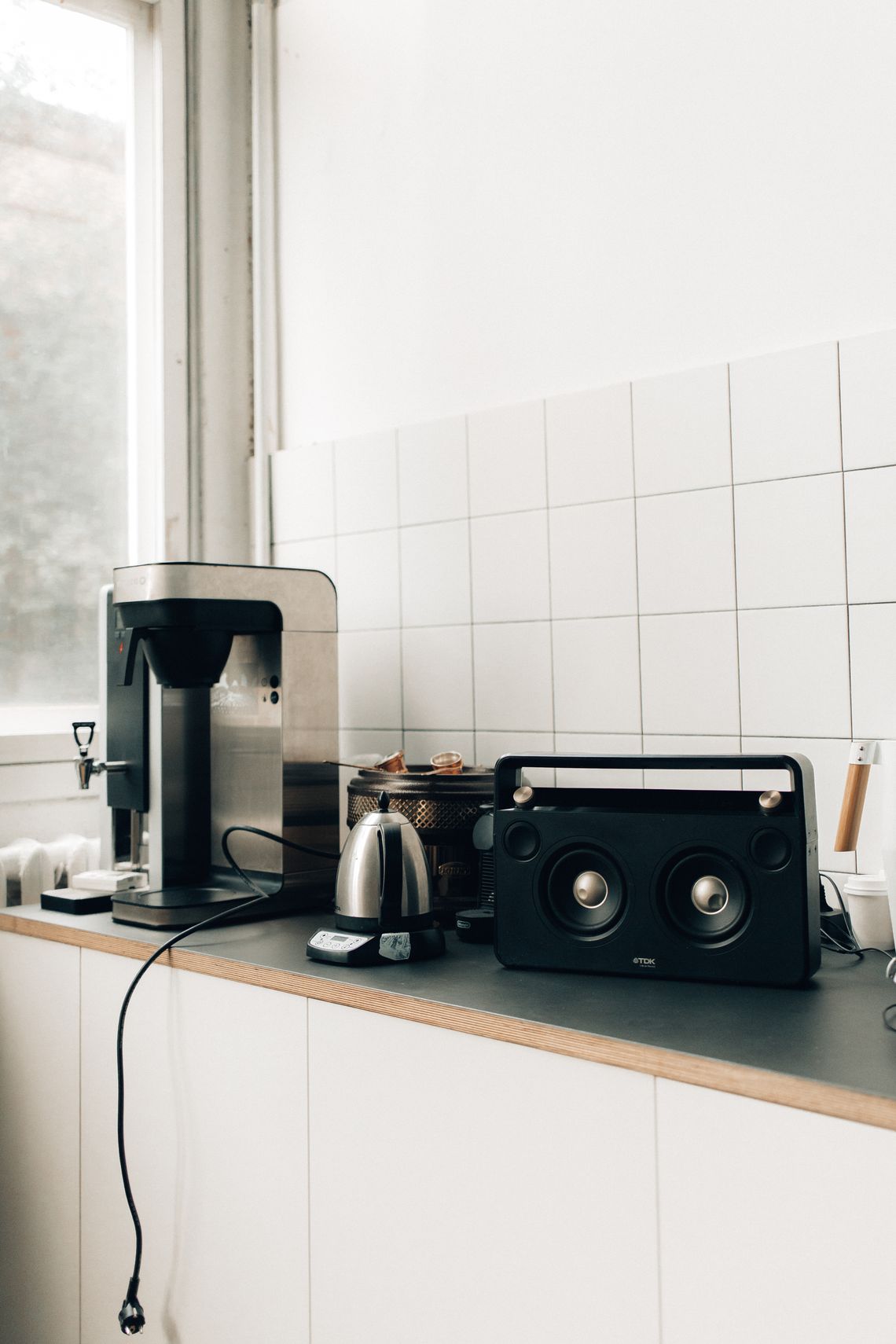
Light modern kitchen with minimalist cabinets and neatly arranged appliances
An intentional place for everyday livingSPACE / 01
01 / A more useful way to organize

Design around your habits.

Forget organizing simply for the photograph. Start with what happens in the kitchen, how often you reach for each item, and the clearances and conditions those products need.

01

Observe.

Notice the places you repeatedly prepare, cook, brew, serve and put things away.

02

Measure.

Check shelf depth, drawer dimensions, appliance footprint and safe ventilation clearance.

03

Group.

Keep tools for a task together, while separating things that require safer storage.

04

Prioritize.

Give easy-to-reach positions to items used often, not just those that look attractive.

05

Maintain.

Leave room to return items to their place without moving an entire shelf each time.

02 / Find the first improvement

Start where it matters.

You don't need to reorganize every cabinet at once. Choose the challenge that most interrupts your day and begin with one manageable zone.

The best organization system is one you can keep using.

A clearer surface

Give every appliance a reason.

Consider which appliances you use nearly every day and which can be stored without making the routine inconvenient.

  • Measure the clearance each appliance requires when operating.
  • Keep power cords away from water, hot surfaces and walkways.
  • Reserve a clear preparation area rather than filling every inch.
See countertop stations ↗
A more useful pantry

Let visibility do the work.

Group ingredients by use, not only appearance. Keep labels and expiry information readable so the system helps with everyday food management.

  • Place frequently used dry goods where they are easy to see.
  • Keep food in suitable containers and retain storage instructions.
  • Review use-by dates and follow food-specific storage guidance.
See pantry organization ↗
A calmer drawer

Organize around the motion.

Move the tools you use together into neighboring sections while keeping sharp blades protected and appropriately separated.

  • Measure the drawer before selecting dividers.
  • Group whisks, spoons, measures and prep accessories by task.
  • Use safe knife and blade storage rather than exposed edges.
See drawer organization ↗
Better cabinet flow

Make the heavy things easy.

Consider how often you lift cookware and whether shelves, racks and cabinet hardware can safely carry the items.
  • Place heavier cookware low and within comfortable reach.
  • Protect surfaces and handles according to the material's care guidance.
  • Allow space to lift out the pan you need without moving a tall stack.
See cookware organization ↗
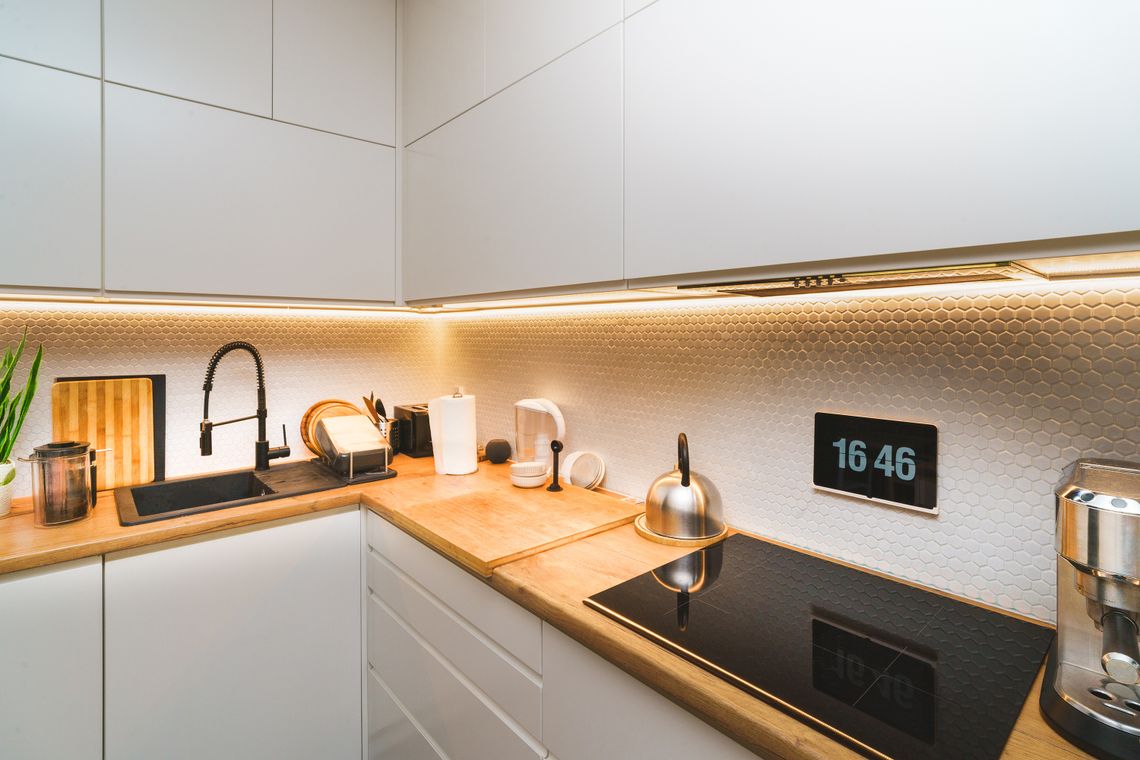
Organized wooden pantry shelves with glass jars holding ingredients and spices
Visible ingredients, a better everyday rhythmZONE / 01
03 / Pantry & shelf organization

Make space for ingredients.

A thoughtful pantry makes it easier to find an ingredient, check what you have and return it to the right place. Keep the system practical rather than arranging everything simply by color.

Visibility matters more than visual perfection.
  1. 01
    Create useful groups.

    Arrange grains, baking items, snacks, spices and regularly used staples in clear zones.

  2. 02
    Keep key details visible.

    Maintain accurate ingredient names, storage directions and date information if transferring food into suitable containers.

  3. 03
    Respect storage conditions.

    Follow food packaging and safety instructions. Not every ingredient belongs in a room-temperature pantry.

  4. 04
    Give shelves breathing room.

    Store heavy containers on appropriate stable shelves and keep items accessible without overloading storage hardware.

04 / Drawers & preparation tools

Find it without searching.

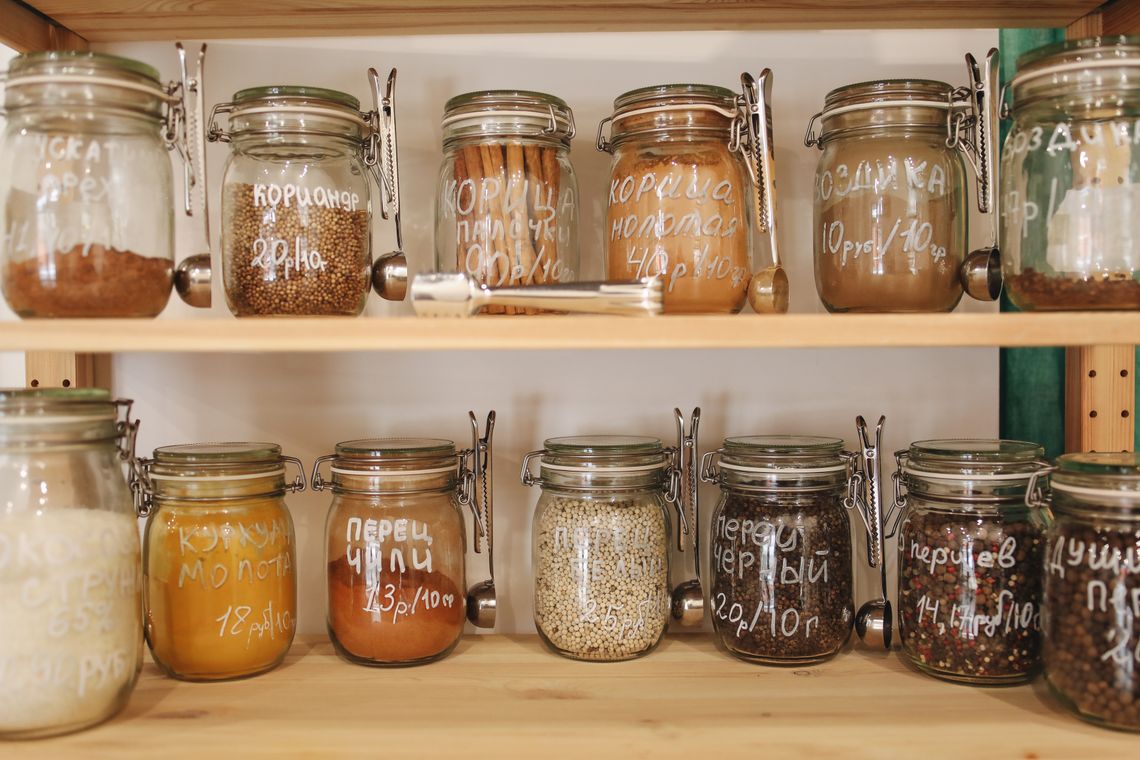
A well-planned drawer has a clear job. Measuring spoons shouldn't need to be found beneath a spatula, and sharp accessories should have their own protected space.

Group the tools by what happens next.
  1. 01
    Sort by task.

    Create separate spaces for utensils, measuring pieces, baking accessories and everyday prep tools.

  2. 02
    Choose flexible dividers.

    Measure the interior, including usable depth and the way the drawer closes.

  3. 03
    Keep blades protected.

    Store knives and processor blades in protective, secure arrangements suited to each item.

  4. 04
    Leave a little room.

    A drawer should close comfortably without forcing loose items underneath other tools.
Open kitchen drawer with utensil organizer and neatly placed cutlery
Precision in the everyday detailsZONE / 02
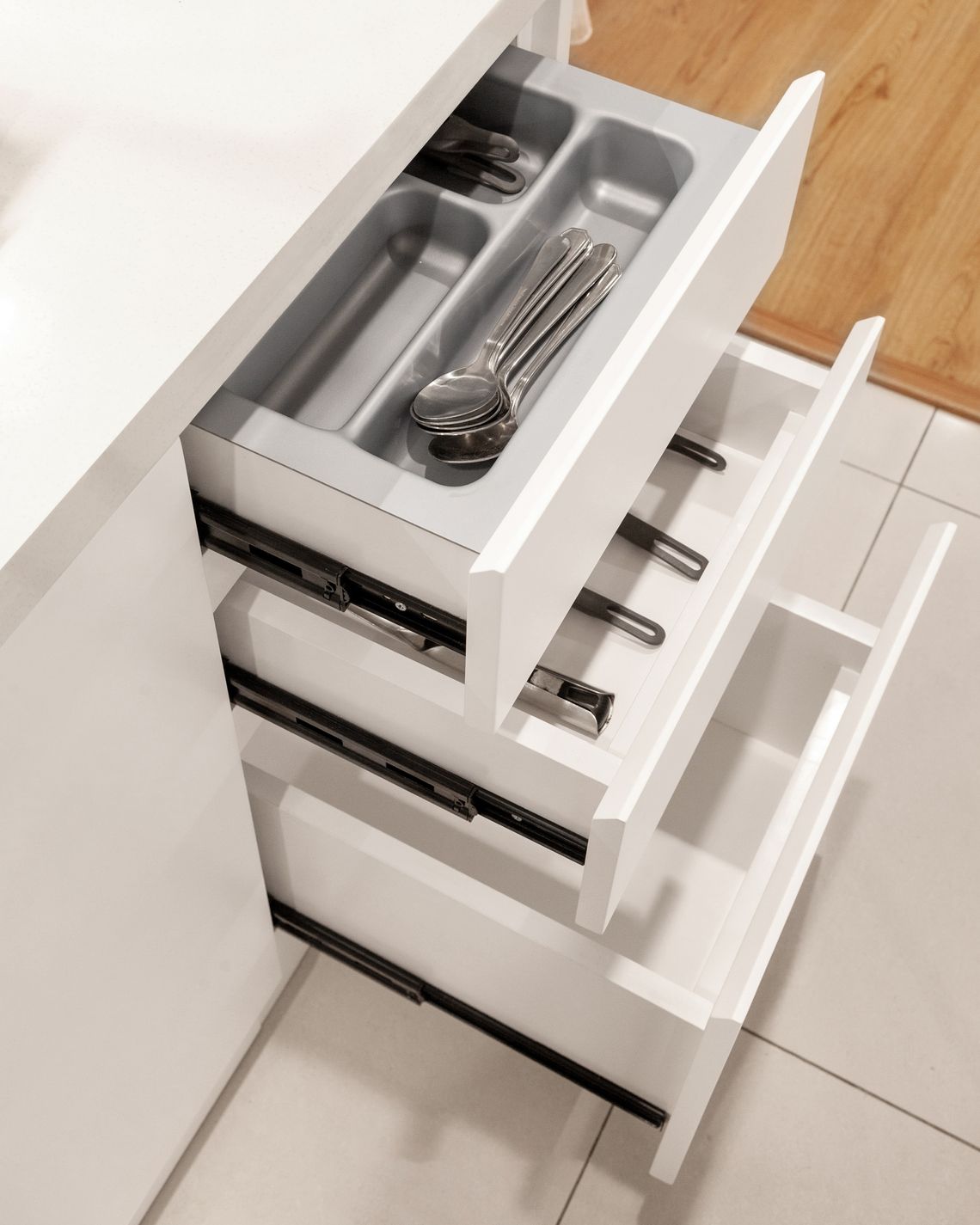
Minimalist kitchen counter with coffee maker and neatly arranged equipment
Working surfaces with a clear purposeZONE / 03
05 / Countertop station planning

Keep the counter useful.

Air fryers, coffee machines, kettles, blenders and toasters all compete for counter space. Place them according to frequency of use, safe positioning and the space required for their operation.

Clear space is a kitchen tool, too.
  1. 01
    Choose everyday residents.

    Keep the equipment you regularly use within easy reach, and store occasional items appropriately.

  2. 02
    Respect operating clearance.

    Follow each appliance's manual for air flow, heat, distance from cabinets and placement around water.

  3. 03
    Create separate workflows.

    Give food prep a clear surface and organize brewing tools near the appropriate appliance without crowding it.

  4. 04
    Plan for cleaning.

    Leave enough access to move, wipe and maintain equipment as required by its instructions.

06 / Cookware & cabinet planning

Store by use and weight.

Cabinet organization should protect the cookware, support safe lifting and make space for the pans and baking tools you actually use.

A useful arrangement should also be safe to reach.
  1. 01
    Keep heavy pieces low.

    Choose stable shelves or drawers with sufficient load capacity for heavier cookware.

  2. 02
    Protect finishes.

    Follow material-specific guidance for stacking, separators and storage conditions.

  3. 03
    Give lids a system.

    Store lids in arrangements that remain stable and make the right size easy to locate.

  4. 04
    Keep baking tools together.

    Group trays, pans, measuring accessories and mixing tools where you can prepare a recipe comfortably.
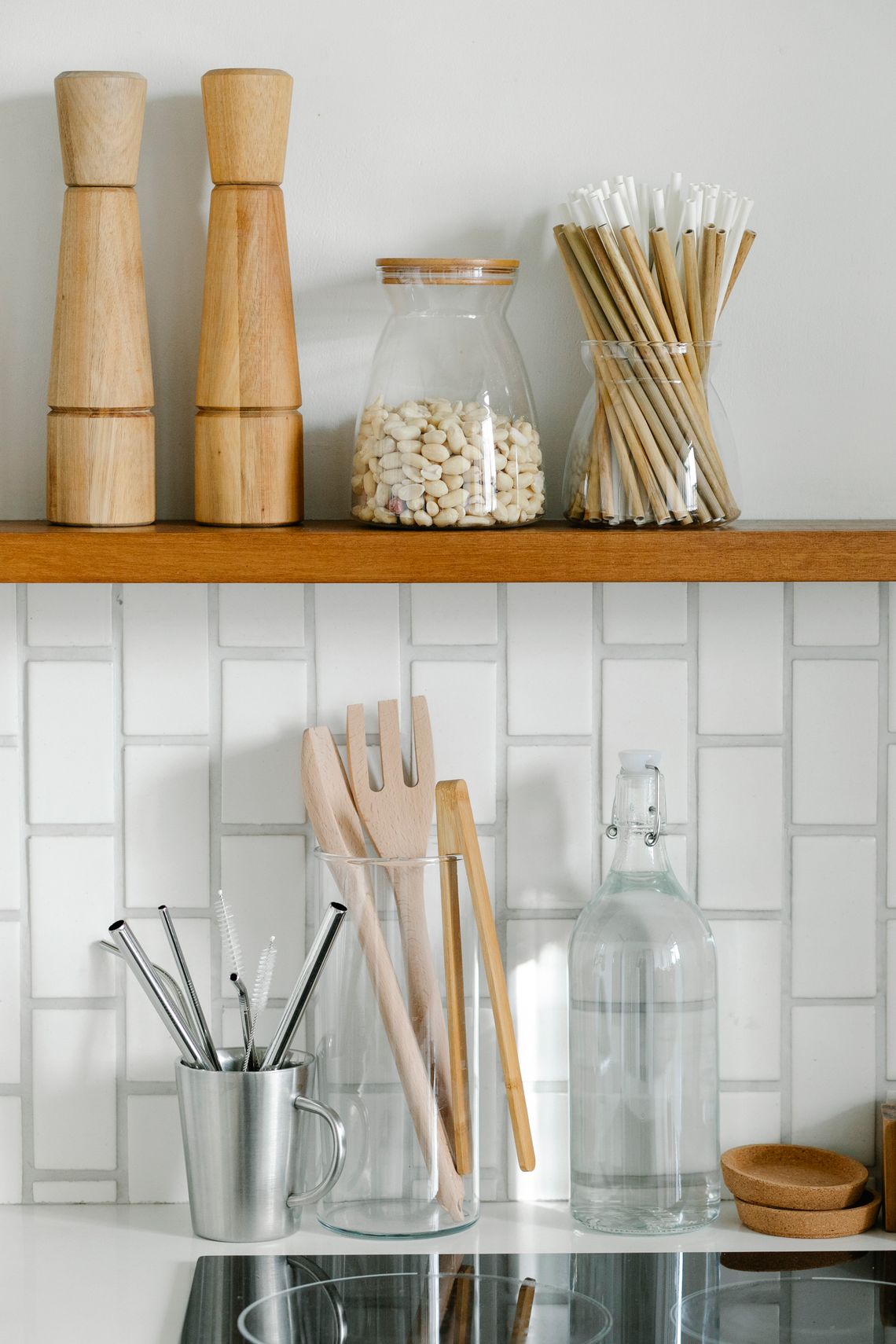
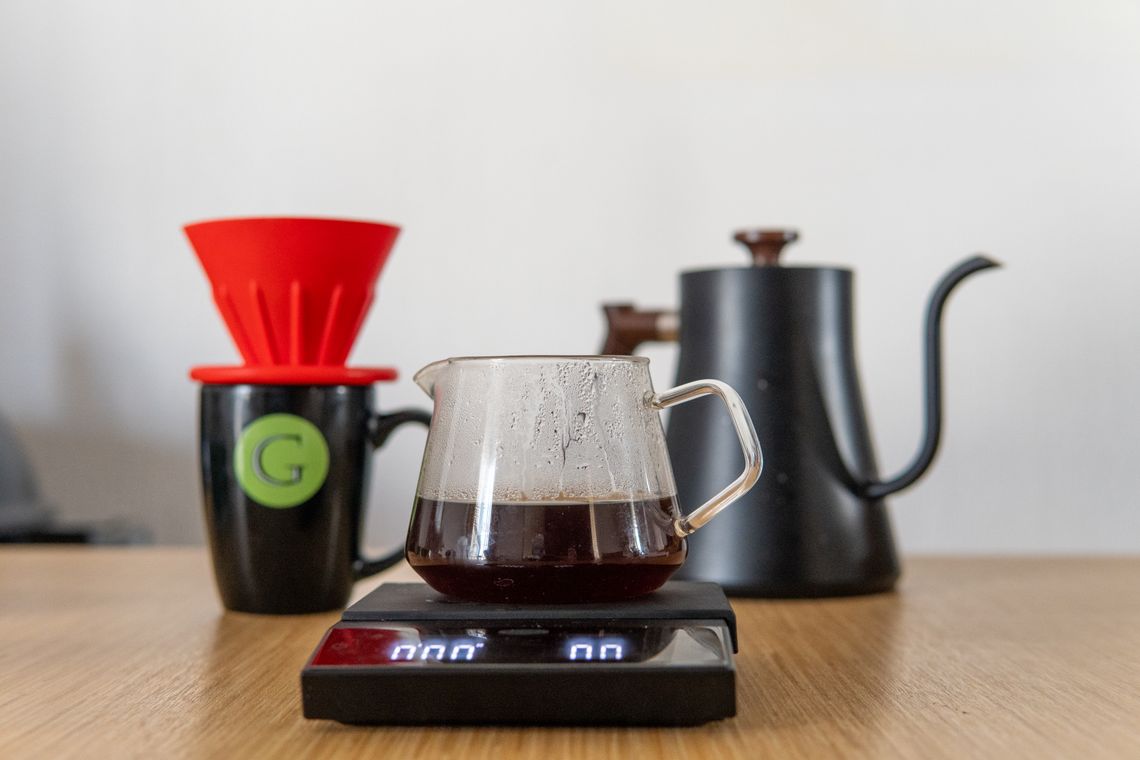
Organized wooden kitchen shelves displaying utensils and kitchenware
Every tool given a thoughtful homeZONE / 04
Organized pour-over coffee station with coffee dripper, scale and kettle
A dedicated space for the daily cupWORKFLOW / 01
07 / Organize by ritual

Give mornings their place.

A small beverage station can feel seamless when the mug, brewing supplies and equipment are easy to find. The aim is not to leave everything out, but to make the daily process simpler.

01
Group the routine.

Keep frequently used mugs, suitable coffee supplies and measuring tools near their preparation area.

02
Keep the appliance safe.

Respect steam, ventilation, power and water clearance required by the exact machine.

03
Make cleaning convenient.

Keep access clear to water reservoirs, drip trays and removable parts.

08 / Storage reference

A place for every category.

These are starting points for Kivqora's fifteen product families. Your own measurements, manufacturer instructions and safe storage needs should always guide the final placement.

01 / Countertop cooking

Heat & preparation.

  1. 01
    Air Fryers

    Store within safe lifting reach; operate only with the specified ventilation clearance.

  2. 02
    Toasters & Countertop Ovens

    Consider crumb-tray access, heat and cabinet clearance before assigning a spot.

  3. 03
    Slow Cookers & Multi-Cookers

    Keep pots, lids and approved accessories together; don't overload shelves.

  4. 04
    Grills & Breakfast Makers

    Store securely with the cooking surfaces protected as the manufacturer advises.

02 / Preparation & tools

Measure & make.

  1. 05
    Blenders & Smoothie Makers

    Keep compatible jars, lids and cups together; protect exposed blades.

  2. 06
    Stand Mixers & Hand Mixers

    Check appliance weight and keep beaters, bowls and hooks identifiable.

  3. 07
    Food Processors & Slicers

    Organize discs and blades in secure, clearly identified storage.

  4. 08
    Knives & Food Prep Tools

    Use protected sharp-edge storage and a dedicated prep-tools zone.

  5. 09
    Measuring & Kitchen Storage

    Group measures by set; keep suitable food containers labeled and clean.

03 / Drink stations

Pour & brew.

  1. 10
    Coffee Makers & Espresso Machines

    Keep water, steam and cleaning access in mind when setting up a station.

  2. 11
    Coffee Grinders & Barista Tools

    Group compatible dosing tools, filters and accessories near the grinder.

  3. 12
    Electric Kettles & Tea Equipment

    Choose safe power and steam clearance, with suitable access to water.

  4. 13
    Juicers & Beverage Appliances

    Keep removable parts together and allow enough space for cleaning.

04 / Cookware & baking

Cook & store.

  1. 14
    Pots, Pans & Cookware

    Keep heavier items on secure lower shelves; protect surfaces and lids.

  2. 15
    Bakeware & Baking Essentials

    Arrange trays, pans, cooling racks and tools without forcing or bending pieces.

A placement guide is not an instruction to operate appliances inside cabinets or near flammable objects. Always follow product-specific safety, storage, ventilation and cleaning requirements.

09 / A practical closing routine

The ten-minute reset.

A regular, modest reset can make the space easier to use. Tick off the tasks as you complete them; this checklist is a flexible prompt, not a countdown or cleaning standard.

A clearer kitchen tomorrow begins with a small routine today.

Today's quick checklist0 of 6 complete

Progress is shown only on this page.

10 / Practical questions

Good to know.

A few thoughtful answers for kitchens with different sizes, routines and storage requirements.

Where should I start organizing a small kitchen?
Begin with the surface or drawer you use most frequently. Measure it, remove items that belong elsewhere, and group the tools by their actual tasks. Preserve safe appliance clearances and access to electrical outlets.
Should every appliance stay on the countertop?
Not necessarily. Keep frequently used appliances easy to access, while storing less-used equipment securely if the product's weight and manual permit it. Any appliance in operation must have the required clearance, ventilation and suitable power arrangement.
Is it safe to decant all food into matching jars?
Not all food has the same storage needs. Use suitable food-contact containers, preserve identification and date information, and follow the original packaging's storage directions and relevant food-safety guidance.
How should I store sharp kitchen tools?
Keep knives, slicer discs and processor blades in secure, protective storage that limits unintended contact with edges. Follow the tool manufacturer's storage instructions and keep sharp items away from children.
What is a good way to organize coffee accessories?
Group the items used for the brewing method—such as filters, scales, cups and compatible grinder accessories—close to where you prepare drinks, without compromising electrical, steam or water clearance.
Can I stack nonstick pans and baking trays?
Check the manufacturer's care recommendations. Some finishes benefit from separators and careful stacking, while certain materials require other storage conditions. Avoid arrangements that place excessive pressure on handles or coatings.
How do I choose drawer dividers or shelf organizers?
Measure the usable interior width, depth and height, and account for handles or drawer rails. Confirm the load rating and stability before using a rack for cookware or heavy equipment.
Where can I ask about an item's dimensions or compatibility?
Kivqora customer support is available 24/7. Have the exact product or model details available so the team can understand your storage, accessories or compatibility question.
Kivqora / Designed for everyday living

A calmer kitchen starts here.

The best setup makes room for your own cooking rituals. If you need help with product sizes, accessories, care or an order, our customer care team is available 24 hours a day, seven days a week.

Contact our team
Free shipping · 3–5 calendar days

All Kivqora products ship free with the stated order delivery timeframe.

Free returns & exchanges

30-day return and exchange window with customer support available 24/7.

Automatic savings, no codes

15% sitewide after successful email subscription, not first-order-only; 20% on selected promotional products.

KIVQORA
support@kivqora.lol+1 (424) 438-575834945 Acacia Ave, Yucaipa, CA 92399, United States
Back to top ↑